Mia Long · 16 September 2026
Archived Coastal Logs Illuminate Shifts in Baltic Ecosystem Patterns Over Two Centuries
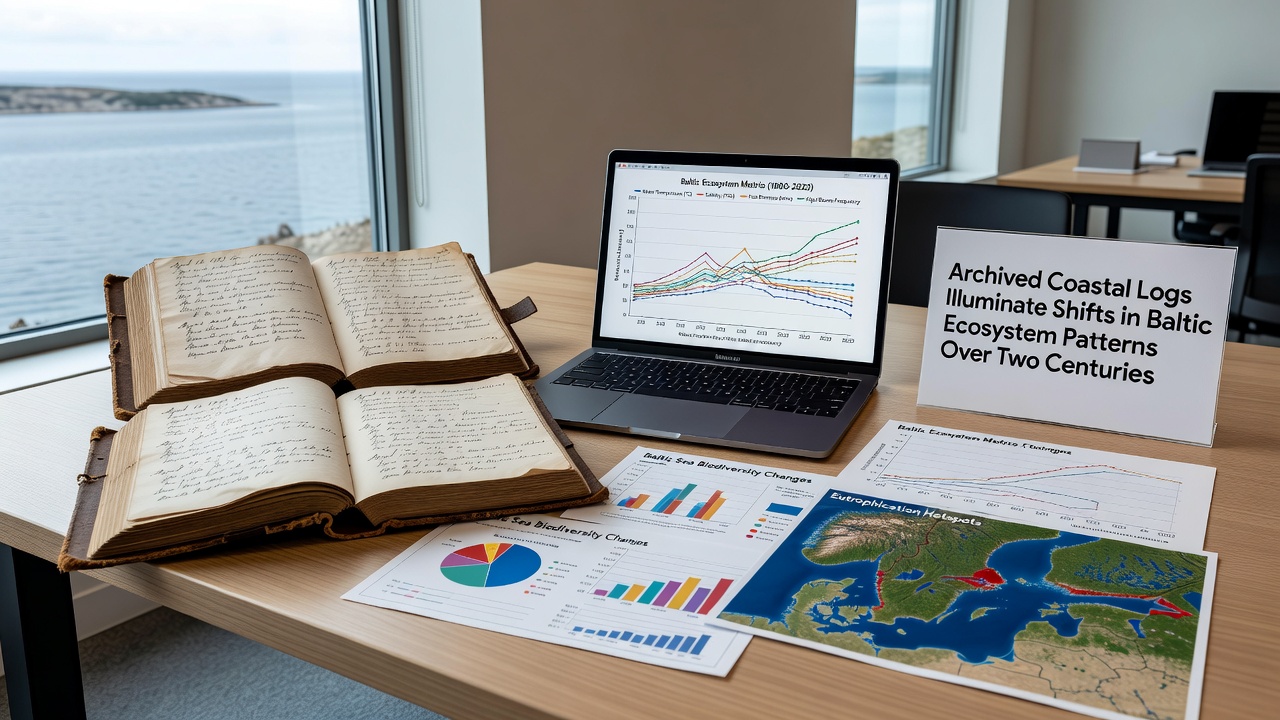
Researchers at institutions along the Baltic coast have turned to centuries-old shipping manifests, port authority records, and fishermen's journals to trace environmental transformations that stretch back to the early 1800s. These documents, preserved in archives from Gdańsk to Stockholm, record water conditions, species catches, and seasonal ice cover with surprising consistency. Data compiled from such sources now forms the backbone of a long-term study released ahead of the international Baltic Sea symposium scheduled for September 2026.
Logbooks from merchant vessels describe salinity levels and herring shoal movements that predate modern monitoring equipment by more than a hundred years. When cross-referenced with temperature readings taken at lighthouses and harbor stations, the records reveal gradual warming trends that accelerated after 1950. Observers note that cod populations appear more sensitive to these changes than previously understood from shorter datasets alone.
Methods Behind the Reconstruction
Teams digitized thousands of pages using optical character recognition before applying statistical models to account for gaps in coverage during wartime and economic downturns. The approach combines quantitative catch figures with qualitative notes on water clarity and algal blooms that appear in marginal annotations. One study coordinated across six national archives produced a continuous time series of nutrient indicators extending from 1820 through the present day.
Marine biologists then compared these historical baselines against contemporary trawl surveys and satellite observations. The comparison shows that the frequency of low-oxygen events in deeper basins has increased markedly since the mid-twentieth century, a pattern consistent with rising nutrient loads from agricultural runoff documented in the same logs after 1945.
Key Ecosystem Changes Identified
Species composition has shifted noticeably. Sprat and herring landings recorded in early logs dominate the pre-industrial period, while later entries document the rise of sprat dominance and fluctuating cod catches that track oxygen availability. Invasive species such as the round goby, absent from any nineteenth-century record, begin appearing in port inspection notes from the 1990s onward.
Sea-ice duration provides another clear signal. Winter navigation logs kept by icebreaker captains and merchant captains show that the number of ice-covered days in the northern Baltic declined by roughly thirty percent between 1850 and 2000. This reduction aligns with instrumental temperature measurements taken at coastal stations and helps explain expanded shipping seasons observed in the same archives.

Nutrient enrichment emerges as a dominant driver after World War II. Fertilizer sales figures preserved in regional agricultural boards, when matched with water-sample descriptions in fishing diaries, illustrate the timing of eutrophication pulses. Researchers have mapped these pulses against known policy changes in land use across the nine bordering countries.
Integration with Modern Monitoring
Current programs run by the International Council for the Exploration of the Sea now incorporate the extended historical series to test ecosystem models. According to data compiled by ICES, projections for future fish stock distributions gain greater precision when calibrated against two centuries of observations rather than the last four decades alone. The same models also inform the Baltic Marine Environment Protection Commission, known as HELCOM, whose periodic assessments draw on the newly digitized archives for context.
Port records additionally capture the timing of major pollution incidents, including oil spills and industrial discharges that predate formal reporting requirements. These entries supply missing details for sediment core studies that seek to date contaminant layers with greater accuracy.
Future Applications and Data Sharing
Plans announced for September 2026 include an open-access database that will allow researchers worldwide to query the full collection of transcribed logs. The platform will link original scans to standardized variables such as catch per unit effort, ice thickness, and water color observations. Workshops scheduled alongside the symposium will train early-career scientists in the use of these historical datasets for climate-impact studies.
Cross-border collaboration has proven essential because many original documents reside in national collections that require coordinated access agreements. Funding from the European Marine Observation and Data Network has supported the digitization phase, while national meteorological services have contributed quality-control expertise.
Conclusion
Archived coastal logs offer a rare window into ecosystem dynamics that modern instruments alone cannot reconstruct. By extending the observational record back two hundred years, researchers gain clearer benchmarks for evaluating current conditions and testing future scenarios. The September 2026 symposium will mark the first comprehensive public release of these integrated datasets, providing a foundation for ongoing assessment of Baltic Sea health across political and disciplinary boundaries.